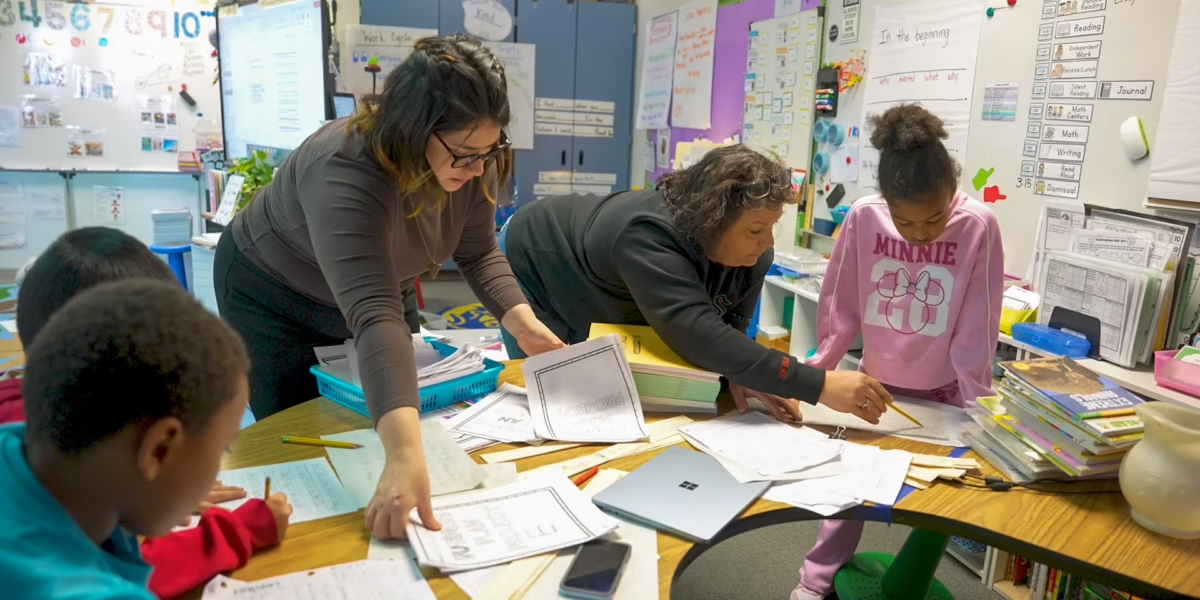
Jackie (L)and Genitee (R) work with 2nd graders at Roosevelt Elementary School in Tacoma through the editing process. Students were tasked with writing about careers they would like to have and how they would use their job to give back to their community.
It's not just writing, math, and science. It's how do I use that in my community and how do I make those connections outside of my classroom?
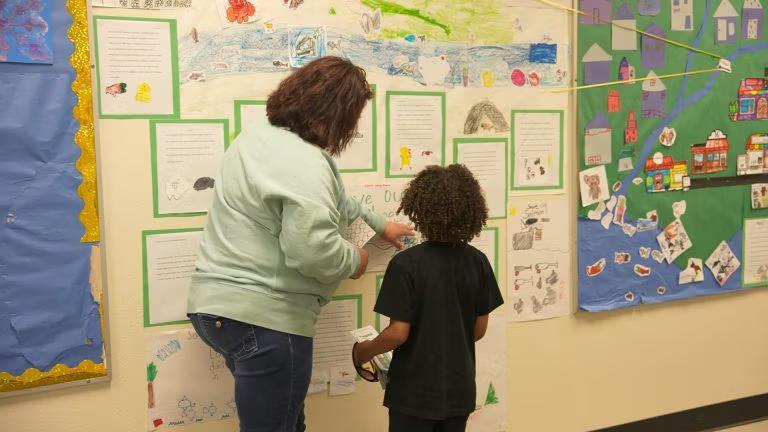
A student at Roosevelt Elementary takes a look at their classmates projects during a presentation of learning evening.
Most teachers walk into a classroom carrying more than a lesson plan. They carry a roster of 30-plus students, a stack of district standards, and evaluation cycles that reduce the art of teaching to a checklist. It is a system designed around compliance, and it can slowly squeeze the vibrancy out of teaching and learning.
At Roosevelt Elementary School, Genitee, a second–grade teacher,in partnership withJackie, TAF transformation coach, has spent the past two years disrupting that pattern; starting with how they approach teaching as a team. “I can come to you and ask what you think about this idea. And you ask ‘Well, what about this?’ It helps having that person to bounce ideas off and ask is this realistic.”
When initial lesson plans shift and change, Jackie is there, helping Genitee find a path forward that is both realistic for her and honoring what excites and engages her students. “We’ve worked so well as a team incorporating excitement,” Genitee shares. “I’ve been in education for 20 years. [Subjects like] writing can be daunting for kids. But, if we incorporate it into a project, kids like to do that.”
Jackie, with a wider view across the schools she partners with, connects that excitement directly to a larger challenge. “How do we keep building [excitement] so they want to keep coming to school?” TAF believes the shift from “checkthebox” teaching to learning that excites starts here: in classrooms where learning feels relevant, and where teachers aren’t working alone. Managing a classroom between multiple educators naturally results in a more dynamic and engaging learning environment.“It’s bringing the real world into the classroom,” Genitee says of the TAF approach.
In fact, their most recent project about salmon life cycles, their role in Pacific Northwest ecosystems, and their deep significance to tribal communities, is a prime example of the STEMbyTAF model in action.
Genitee and Jackie work as a team to ensure learning is relevant and exciting for students.
Students began asking bigger questions, first of Jackie and Genitee, then of each other. What does it mean to be part of a community? How can we be advocates for the species our communities depend on? The answers showed up in their writing, then in their voices, then in their own call to action projects, calling for salmon preservation and environmental advocacy.
When students are treated as leaders and learning shifts to a community effort rather than the authority of one person, learning is transformed. This is what TAF brings into each of our partner schools: the practice of teaching as a communal responsibility. This becomes the foundation where generational change becomes possible.
Rather than learning about history and what's happened before, it's learning what can we do now, together.
Every Student is Like a Star; No Two are the Same
It takes everyone working together to ensure transformative education like this reaches more students. Learn how you can help make learning environments like this available for future generations.